Close to 100 scientists from all over Europe, the United States, and Japan are gathering this week at the Institute for Solar Physics (KIS) in Freiburg to present and discuss the first scientific results from the successful third flight of the balloon-borne solar observatory SUNRISE. KIS is a key contributor to the SUNRISE project. The meeting marks a milestone in the study of the Sun by bringing together researchers from all over the world who are analysing unprecedented new data gathered by the SUNRISE III project.
SUNRISE III completed its scientific flight in July 2024 after launching from the Esrange Space Center near Kiruna in northern Sweden. Carried by a giant helium balloon to an altitude of approximately 35–37 kilometers, the observatory followed a route along the Arctic Circle and crossed the Atlantic before landing in northern Canada after 6.5 days of observations. Flying above more than 99 percent of Earth’s atmosphere enabled the telescope to obtain stable, measurements undisturbed by atmospheric turbulence and access wavelengths that are inaccessible from ground-based observatories.
The SUNRISE III observatory carried a one-meter solar telescope, the largest solar telescope ever flown on a balloon platform. Equipped with three new instruments operating in the near-ultraviolet, visible, and near-infrared wavelength ranges, the mission probed the Sun’s magnetic field that drives all solar activities including flares and coronal mass ejections which produce beautiful aurorae, but can also disturb or damage satellites and other sensitive technical systems. The resulting data provide an unprecedented three-dimensional view of solar magnetic structures and their evolution.
The contribution of KIS was the image stabilisation system which enabled SUNRISE III to gather sharp images in spite of hanging from a balloon and being buffeted by the wind. The aim of SUNRISE was to be able to resolve structures on the Sun as fine as 50-60 km. Given that the Sun is 149 million km from Earth, this is similar to resolving a 1 Euro coin at a distance of roughly 40 km. KIS is a world leader in producing equipment that stabilises the images of large telescopes. This worked very successfully in the case of SUNRISE III.
Over the past 18 months, the instrument teams have undertaken extensive calibration and validation work to prepare the raw observations for scientific analysis. These efforts are already yielding a remarkable scientific return. Currently, more than 30 scientific papers are being prepared for a topical issue of the Astrophysical Journal Letters, one of the leading astrophysics journals. This alone makes SUNRISE III by far the most successful balloon-borne astronomy mission.
A central highlight of the Freiburg meeting is the public release of the first batch of fully processed SUNRISE III observations. For the first time, researchers worldwide will have access to these unique data through the mission’s data portal. This release is expected to stimulate a broad range of new investigations and foster collaborations extending far beyond the original mission team.
The SUNRISE project is managed by an international consortium led by the Max Planck Institute for Solar System Research (MPS) in Göttingen, Germany. The consortium includes partners from Germany, Spain, Japan, and the United States. The 2024 flight was carried out with support from NASA’s Scientific Balloon Program and represented the third successful science flight in the history of the mission.
As the first scientific analyses mature and the data become available to the broader community, SUNRISE III is expected to provide new insights into the fundamental processes that govern solar magnetism, atmospheric heating, and solar variability. The Freiburg meeting offers the first comprehensive view of these results and marks the beginning of a new phase of scientific exploration based on one of the most complete observational data sets ever obtained of the Sun’s visible atmosphere.
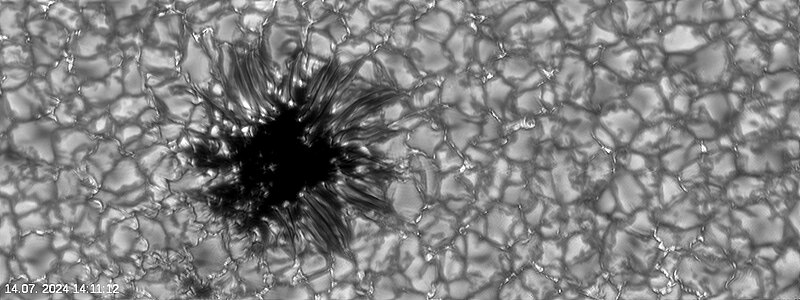
Figure 1: Snapshot out of a time series taken with the SCIP instrument. Image credit: Sunrise3 Team
Figure 2: Composite of a context image in visible light and slit-scan images of the indicated subregion in the light of several near-ultraviolet spectral lines sorted according to their height of origin in the solar atmosphere. The bottom graph shows the average spectrum over this subregion. Image credit: Shahin Jafarzadeh (Queen's University Belfast)
![[Translate to Englisch:]](/fileadmin/_processed_/a/0/csm_pr-image__Shahin_Jafarzadeh_74fa6ce8cf.jpg "Figure 2")